


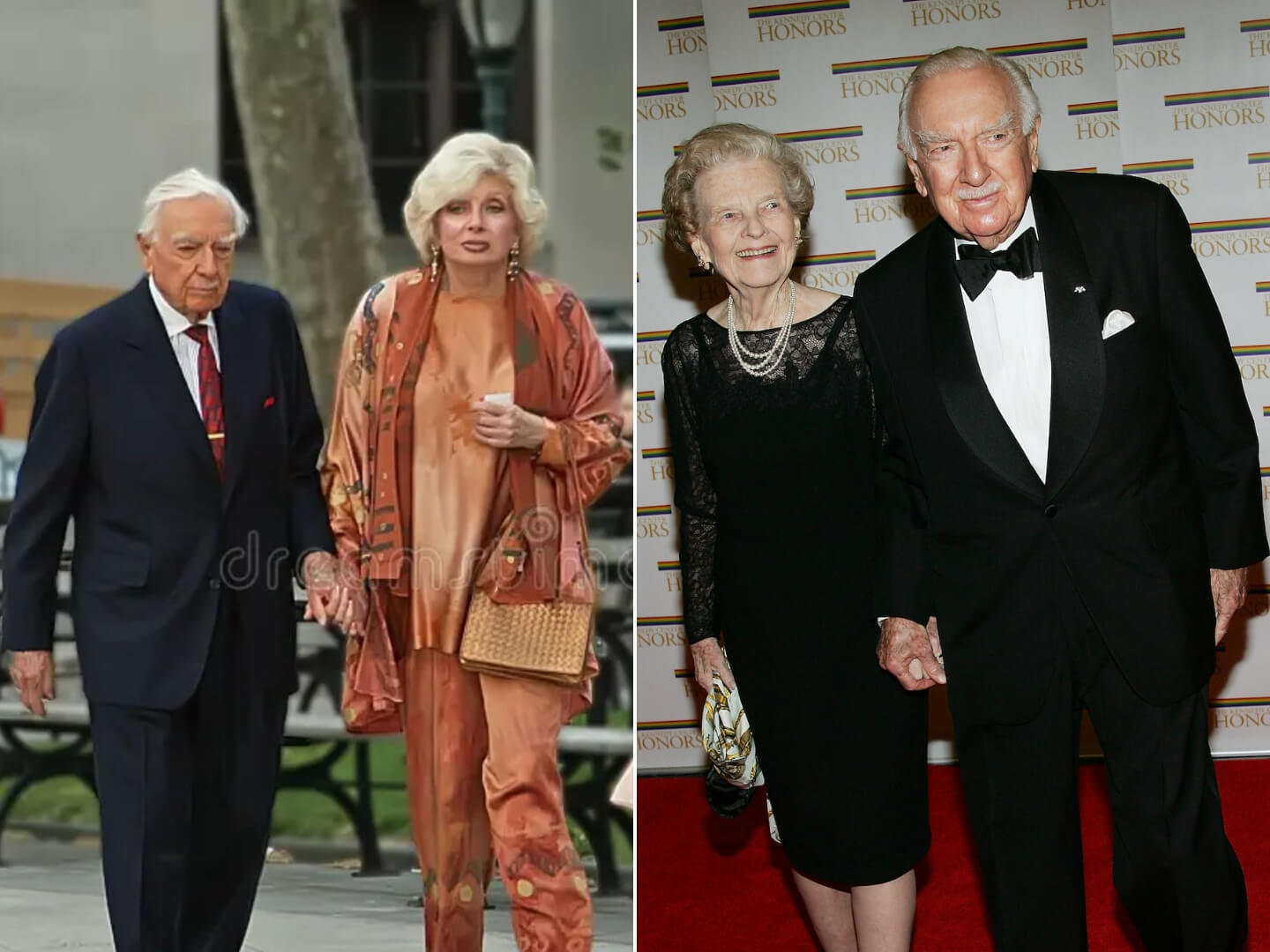
Walter Cronkite is remembered as one of the most influential figures in American television journalism. For nearly two decades, he sat behind the anchor desk of the CBS Evening News, becoming a familiar and trusted presence in American homes. Yet behind the famous newsman was a private family life that rarely received the same attention as his career.
At the center of that family was Mary Elizabeth “Betsy” Maxwell Cronkite, the woman Walter Cronkite married in 1940. Their marriage lasted nearly 65 years and included periods of war, extensive travel, professional success, and the pressures that came with Cronkite’s growing fame. Together, they raised three children: Nancy, Mary Kathleen, and Walter Leland “Chip” Cronkite III.
Betsy was more than simply the wife of a famous television journalist. She had a professional life of her own, worked in journalism, and developed a reputation for having a sharp sense of humor. Looking at her life and the Cronkite family offers a more personal view of the man millions of Americans knew as “Uncle Walter.”
Who Was Betsy Cronkite?
Mary Elizabeth Maxwell, known as Betsy, met Walter Cronkite while the two were working at radio station KCMO in Kansas City, Missouri.
According to accounts of their early relationship, Cronkite first encountered Betsy at the radio station in the 1930s. The two were eventually cast together in a commercial, and Cronkite later recalled being immediately attracted to her. Their relationship developed over several years before they married on March 30, 1940.
Betsy was not simply someone who stepped into the role of a journalist’s wife. She had her own background in writing and journalism. Shortly after their marriage, she became the women’s editor of the Kansas City Journal-Post. Her professional experience gave her an understanding of the demands of journalism at a time when Walter was still establishing himself as a reporter.
That shared understanding of journalism became important as Walter’s career took him increasingly far from home.
A Marriage Shaped by Journalism
Walter Cronkite’s career was rarely predictable. Before becoming one of America’s best-known television anchors, he worked as a reporter for United Press and covered major international events.
During World War II, his work took him overseas, creating long periods of separation from his wife. While Walter was reporting abroad, Betsy continued working. She took a position with Hallmark, where she worked on a company newspaper that was also distributed to members of the armed forces.
The arrangement was not necessarily easy. Journalism demanded long hours, travel, and a willingness to leave home whenever an important story developed. Those pressures only increased as Walter moved from print and wire-service reporting into television.
Yet the couple remained together through these changes.
Their marriage eventually spanned the transformation of American journalism from newspapers and radio into the age of network television. By the time Cronkite became the anchor of the CBS Evening News, Betsy had already spent years sharing the uncertainties and demands of his profession.
The Woman Behind the Anchor
It can be tempting to describe Betsy simply as the woman behind the famous newsman. The historical record, however, suggests a more interesting picture.
Betsy had a sharp wit and strong personality, qualities that Walter himself appreciated. Cronkite credited her sense of humor, tolerance, and support for the longevity of their marriage.
That description is revealing. Walter Cronkite spent much of his professional life being treated with extraordinary seriousness. He was regarded as a symbol of reliability and calm during some of the most turbulent moments in modern American history.
At home, however, his relationship with Betsy appears to have included plenty of humor.
People who knew the couple remembered Betsy’s ability to puncture the seriousness surrounding a man often called the “most trusted man in America.” She could bring a lighter perspective to situations involving her famously serious husband.
That contrast seems to have been part of what made their relationship work.
Walter Cronkite’s Wife and Their Children
Walter and Betsy Cronkite had three children: Nancy, Mary Kathleen, and Walter Leland “Chip” Cronkite III.
Their children grew up with a father whose professional life was unusually public. Millions of Americans recognized Walter Cronkite’s face and voice, but within the family he was simply their father.
That distinction became especially clear after Cronkite’s death in 2009. His children spoke publicly about their memories of him and described a side of their father that was very different from the solemn figure viewers saw on television.
Kathy described the household as fun and full of laughter, dancing, music, and a sense of adventure. She explained that it could be difficult for her to understand why so many people felt such a powerful connection to her father because, to her, he was simply “Dad.”
That perspective is valuable because it separates Walter Cronkite the cultural figure from Walter Cronkite the family man.
Family Life Away From Television
Cronkite’s fame could have made ordinary family life difficult. His work placed him at the center of national events, and his professional responsibilities often required travel.
Still, the Cronkites maintained a family life that extended beyond the television studio.
They were also part of New York’s social and cultural world. The couple attended Broadway openings and movie premieres and maintained friendships with people from journalism, entertainment, literature, and public life.
Their interests were not limited to professional circles. Walter was an enthusiastic sailor, and sailing became an important part of his life outside journalism. Betsy sometimes accompanied him on these adventures.
These glimpses offer a picture of a family that continued to build a private life even while Walter remained one of the most recognizable people in America.
Betsy’s Sense of Humor
One of the most frequently mentioned characteristics of Betsy Cronkite was her sense of humor.
Walter’s career placed him in situations that could be stressful or even dangerous. He covered wars, political upheavals, presidential campaigns, space missions, and other historic events. His wife apparently understood that life with a famous journalist required a certain amount of flexibility.
Accounts from people who knew the couple describe Betsy as a woman with a sharp wit who was not afraid to tease or challenge her husband.
Her humor also appears in recollections from people who knew the couple socially. Stories about their life together often show Betsy bringing a practical and sometimes mischievous perspective to Walter’s adventures.
For a man whose professional identity was built around composure, having a partner who could make him laugh may have been particularly meaningful.
A Long Marriage
Walter and Betsy Cronkite married in 1940 and remained together until Betsy’s death in 2005.
Their marriage lasted nearly 65 years. Betsy died on March 15, 2005, at her home in New York after complications from cancer. She was 89.
The timing is significant. Betsy was with Walter through almost every major stage of his professional development. She was there before he became a household name and remained his wife throughout his years as one of America’s most prominent broadcasters.
She was also with him after he left the CBS Evening News anchor chair in 1981. By then, the couple had already spent more than four decades together.
Walter continued working after his retirement from the anchor desk, producing documentaries, writing, traveling, and pursuing his interests. His public career changed, but his family remained an important part of his life.
What Walter Said About Their Marriage
Cronkite’s own comments about Betsy provide some of the clearest evidence of how he viewed their relationship.
After decades of marriage, he credited her humor, tolerance, and support for helping the relationship endure. He acknowledged that the uncertain schedule and frequent travel associated with his work could create difficulties, and he appreciated Betsy’s ability to handle those demands.
That admission gives an unusually candid glimpse into the personal cost of a high-profile journalism career.
From the outside, Cronkite’s professional life looked remarkably stable. Viewers saw him arrive at the same desk night after night, calmly delivering the day’s news. Behind the scenes, however, his career required his wife and family to adapt to a constantly changing schedule.
Their long marriage was therefore not simply a footnote to his career. It was part of the foundation that allowed that career to develop.
Betsy and Cronkite’s Later Years
By the 1990s, Walter and Betsy had been married for more than half a century.
Walter remained active well into his later years. He continued sailing, traveling, appearing in documentaries, and participating in journalism-related activities. Betsy remained a familiar presence in his life and occasionally appeared with him at public events.
The family also remained close during difficult moments. When Walter underwent heart surgery in 1997, his wife and children were among those present during his hospitalization.
That small detail says a great deal about the family’s closeness. Despite Cronkite’s enormous public profile, his family was still the group gathered around him during an important personal moment.
Her Death in 2005
Betsy’s death marked a major personal loss for Walter Cronkite.
She died on March 15, 2005, just weeks before what would have been the couple’s 65th wedding anniversary. Her death came after a battle with cancer. She was 89 years old.
For someone who had spent almost two-thirds of his adult life married to the same person, losing Betsy represented the end of an extraordinary chapter.
Walter lived for another four years. He died on July 17, 2009, at the age of 92. His children survived him.
By then, the public remembered Cronkite primarily for his journalism, but those closest to him knew that his identity extended well beyond the anchor desk.
He was a husband and father.
The Cronkite Children Remember Their Father
When Walter Cronkite died, his children offered an important perspective on his private character.
Rather than focusing only on his professional achievements, they remembered a father who enjoyed life and had a playful side.
Kathy Cronkite described her parents as having a “great sense of play and of life as an adventure.” She remembered a household filled with dancing, laughing, and music.
Nancy, meanwhile, emphasized the importance of her father’s commitment to journalism and its role in helping citizens understand the world around them.
Their recollections help explain why the family story matters. Walter Cronkite may have belonged to the public, in a sense, but within his home he occupied a much simpler role.
He was a husband and father.
A Family That Stayed Mostly Private
Unlike many families connected to major celebrities, the Cronkites did not make their private lives the center of public attention.
Walter’s professional reputation was enormous, but Betsy generally remained outside the spotlight. Even though she attended events with her husband and occasionally appeared in photographs, she maintained an identity separate from his fame.
That privacy makes the surviving details of their family life particularly valuable.
The available accounts show a couple who experienced the unusual pressures of fame without allowing fame to completely define their relationship. Their children likewise grew up with an awareness that their father was famous while experiencing him primarily as a parent.
This is perhaps one of the most interesting aspects of the Cronkite family story.
Why Betsy Cronkite Matters
When people search for Walter Cronkite wife, they are often looking for a basic answer: Who was she?
The answer is Betsy Cronkite. But her story deserves more than a one-line biography.
She was a writer, a former women’s editor, a working professional, a mother of three, and the longtime partner of one of the most prominent journalists of the 20th century. She supported a husband whose career frequently took him away from home and brought him into the center of historic events.
At the same time, she appears to have retained a personality of her own—particularly her wit and independence.
That makes Betsy an important part of understanding Walter Cronkite himself.
A Lasting Partnership
Walter Cronkite’s career is usually discussed through the major events he covered: presidential elections, wars, the civil rights era, the space program, and moments of national tragedy.
But a person’s life cannot be measured only by the stories they report.
For Cronkite, there was also the long partnership he built with Betsy. They married in 1940, raised three children, navigated decades of professional uncertainty and public attention, and remained together until her death in 2005.
Their story provides a quieter perspective on one of America’s most recognizable journalists.
Betsy was not merely Walter Cronkite’s wife. She was his longtime companion, a professional in her own right, a mother, and someone whose humor and support helped balance the demands of his extraordinary career.
For readers interested in the person behind the famous television anchor, the Cronkite family offers an important reminder: the most visible part of a public figure’s life is rarely the whole story.
