


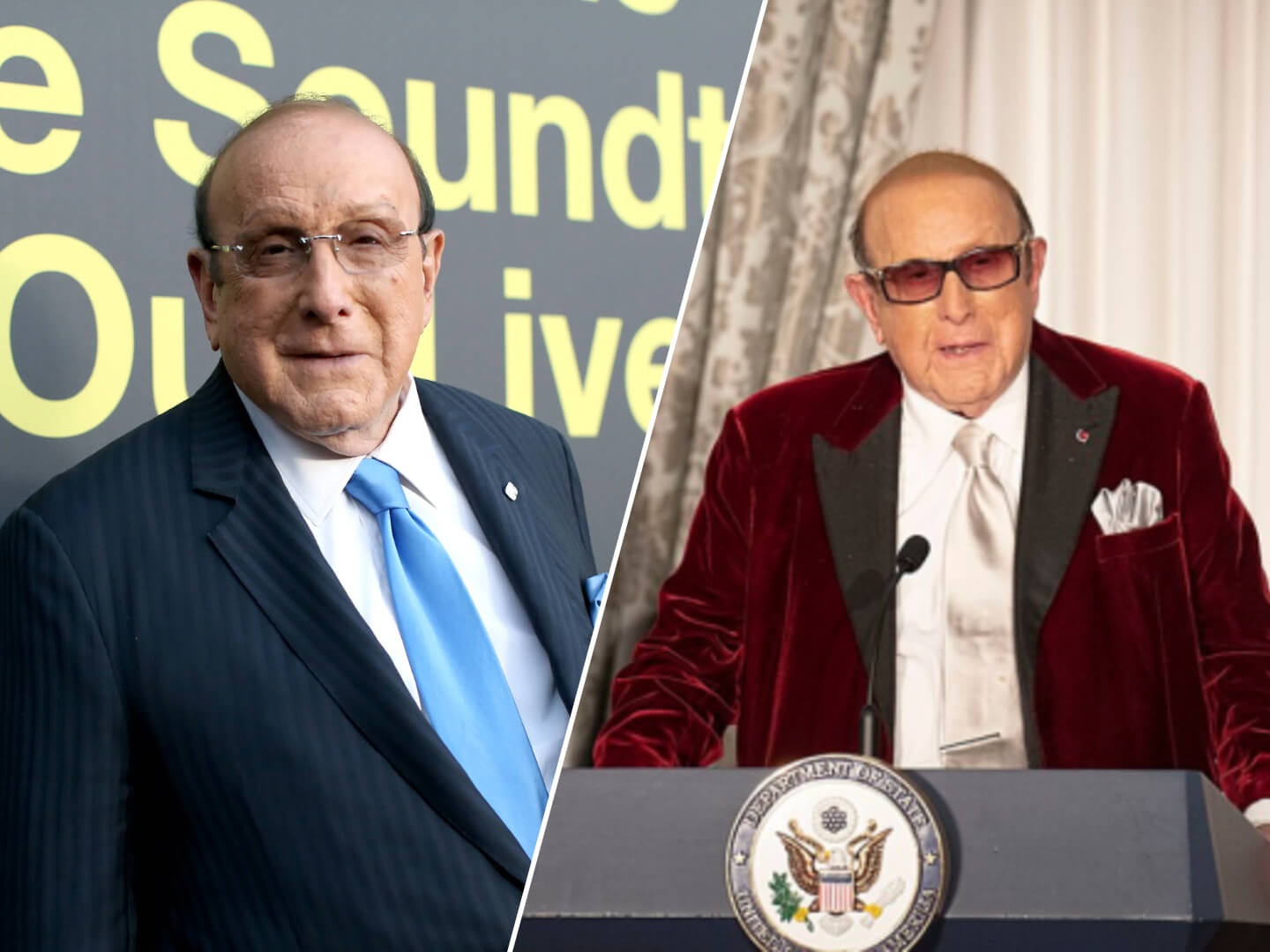
Clive Davis was one of the most successful and influential music executives in American history. Known for discovering exceptional talent and helping artists build lasting careers, he spent more than six decades shaping the recording industry. From working with Whitney Houston and Alicia Keys to leading major record labels, his professional achievements brought him considerable financial success and international recognition.
Clive Davis’s net worth was estimated at approximately $600 million at the time of his death in 2026, according to Celebrity Net Worth. Other publications have reported higher figures, including $850 million. However, his complete financial records were not publicly disclosed, making these amounts estimates rather than confirmed valuations.
His fortune was closely connected to his leadership positions at Columbia Records, Arista Records, J Records, and Sony Music Entertainment. Unlike performers who primarily earn money through recordings and concerts, Davis established his career through executive management, artist development, and business decisions that influenced the direction of popular music.
Born on April 4, 1932, in Brooklyn, New York, Davis initially pursued a career in law before entering the music business. His ability to recognize promising performers and understand changing audience preferences eventually established him as one of the industry’s most respected figures.
He died on June 22, 2026, at the age of 94, leaving behind an extraordinary professional legacy. His story is not simply about building personal wealth. It is also about recognizing opportunities, maintaining creative relationships, and helping some of the world’s most recognizable musicians achieve lasting success.
Clive Davis Net Worth and Sources of Wealth
The subject of Clive Davis net worth has attracted considerable attention because of his long association with successful recording artists and major entertainment companies. His estimated fortune reflected decades of executive leadership and commercial accomplishments in an industry known for generating enormous revenues.
Celebrity Net Worth reported that Davis had an estimated fortune of $600 million when he died in June 2026. Some other publications have suggested larger amounts. Since detailed information about his private investments, property holdings, liabilities, and estate was not made publicly available, it is difficult to establish an exact figure.
It is important to understand that net worth does not represent the amount of cash a person keeps in a bank account. Instead, it generally refers to the total value of an individual’s assets after subtracting outstanding liabilities. For a prominent entertainment executive, those assets might include financial investments, property, savings, and business interests.
Executive compensation was an important part of Davis’s professional financial background. Throughout his career, he occupied senior positions at several major record companies. These roles generally involve substantial responsibilities, including signing performers, supervising artistic development, directing business strategies, and managing relationships with recording artists.
However, the precise salary and compensation packages Davis received during different stages of his career have not been comprehensively documented in public sources. It would therefore be misleading to assign specific annual earnings to him without reliable financial evidence.
His association with Arista Records was particularly significant. Davis founded the company with Columbia Pictures in 1974 and helped turn it into one of the most recognizable record labels in the United States. Arista became home to successful performers across pop, rock, soul, and contemporary music.
The commercial success of these artists strengthened the label’s reputation and contributed to the financial performance of the businesses Davis managed. Nevertheless, record-label revenue should not be confused with his personal earnings. A company generating millions of dollars in sales does not mean its executives receive that entire amount.
Another important chapter was the establishment of J Records in 2000. Through the label, Davis continued working with major performers and introduced new talent to international audiences. Its success demonstrated that his business influence extended well beyond the earlier decades of his career.
Davis also worked at RCA Music Group and eventually became Chief Creative Officer of Sony Music Entertainment in 2008. These positions reflected his continued importance to major recording companies, even after he had already spent decades in the industry.
Beyond recording companies, Davis published books about his experiences. His autobiography, The Soundtrack of My Life, appeared in 2013 and became a bestseller. Although book sales may have generated additional income, reliable public figures detailing his personal publishing earnings are unavailable.
His professional reputation was another valuable asset. Record labels and recording artists respected his experience, judgment, and understanding of musical audiences. That reputation helped him maintain an influential role in an industry where commercial tastes regularly changed.
Ultimately, Clive Davis built his fortune through long-term participation in the music business rather than success as a recording performer. His career demonstrates how executive leadership, commercial judgment, and enduring professional relationships can produce substantial wealth.
Early Life and Rise in the Music Industry
Clive Jay Davis was born in Brooklyn, New York, on April 4, 1932. He grew up in a Jewish family and experienced significant personal difficulties during his teenage years, including the loss of both parents. These experiences contributed to an early sense of independence and responsibility.
Education played a central role in his development. Davis attended New York University, graduating magna cum laude in 1953. He then continued his studies at Harvard Law School, where he earned his law degree in 1956.
At the beginning of his professional life, he had no particular expectation of becoming a prominent figure in the recording industry. He worked as a lawyer, developing skills in contracts, negotiation, and corporate affairs. Those abilities later proved extremely useful in his music career.
Davis joined the legal side of Columbia Records’ parent company, CBS, in 1960. His understanding of business arrangements and his ability to handle complicated legal matters helped him advance within the organization.
By 1966, he had become vice president and general manager of Columbia Records. The following year, he was appointed president, beginning a period that would transform both his career and the company’s musical direction.
During the 1960s, rock music was becoming an increasingly important commercial and cultural force. Davis recognized that record companies needed to respond to changing audience preferences rather than rely exclusively on established styles.
A defining experience came when he attended the Monterey International Pop Festival in 1967. The performances and audience response helped convince him of the extraordinary potential of contemporary rock music.
Soon afterward, he signed Janis Joplin and her group, Big Brother and the Holding Company, to Columbia Records. This decision became one of the early examples of his ability to identify performers capable of attracting passionate audiences.
Over the following years, Davis was involved in bringing several influential artists to Columbia, including Bruce Springsteen, Santana, Billy Joel, Aerosmith, Chicago, and Earth, Wind & Fire.
His approach extended beyond simply signing performers. He believed that record companies should understand an artist’s identity, support their creative development, and identify opportunities for broader commercial success.
This philosophy helped Columbia strengthen its position in the rapidly expanding popular music market. His achievements also established him as an executive capable of combining creative understanding with business strategy.
Despite these successes, his Columbia career ended in 1973 when he was dismissed following allegations concerning the use of company funds. Davis disputed accusations of wrongdoing. The departure was a significant professional setback, but it did not prevent him from rebuilding his career.
In 1974, he founded Arista Records in partnership with Columbia Pictures. This development marked a new beginning and eventually became one of the most important achievements of his professional life.
Arista quickly began establishing itself in the competitive recording industry. Barry Manilow’s success with the song Mandy helped give the new company an early commercial breakthrough.
The label subsequently worked with performers including Patti Smith, Aretha Franklin, Dionne Warwick, Kenny G, and Sarah McLachlan. Its diverse roster reflected Davis’s belief that successful music could emerge from many different genres.
Perhaps the most famous relationship of his Arista years was with Whitney Houston. Davis recognized her extraordinary vocal ability and played a major role in developing her recording career.
Houston became one of the most successful recording artists of her generation, achieving worldwide recognition through hit albums and singles. Their professional partnership became an important part of both artists’ and executives’ music industry histories.
The success of Arista demonstrated that Davis’s achievements at Columbia had not been accidental. He had developed a consistent understanding of talent, audiences, and the business decisions required to connect the two.
Career Achievements and Personal Life
Clive Davis remained professionally active through several major changes in the recording industry. His career continued beyond the traditional record business of the 1970s and 1980s into the changing commercial environment of the 1990s and 2000s.
One of his most important achievements was expanding Arista’s influence through partnerships with successful producers and entrepreneurs.
In 1989, Davis worked with L.A. Reid and Babyface to establish LaFace Records. The label became associated with major performers including Toni Braxton, TLC, Usher, and OutKast.
These partnerships demonstrated his willingness to recognize emerging musical styles and collaborate with people who understood new audiences. Rather than concentrating exclusively on artists he personally discovered, he supported broader creative networks.
During the 1990s, he also helped establish Bad Boy Records through a partnership involving Sean Combs. The company became influential in hip-hop and contemporary R&B, introducing or promoting several commercially successful acts.
Another notable achievement came through his renewed association with Santana. The 1999 album Supernatural became an enormous commercial success and introduced the guitarist’s music to a new generation of listeners.
The project also brought Davis major recognition at the Grammy Awards, reinforcing his reputation as a producer and executive who could help established musicians find new audiences.
In 2000, Davis founded J Records. The company soon became associated with Alicia Keys, whose debut album Songs in A Minor received widespread acclaim and achieved substantial commercial success.
Davis also worked with performers such as Luther Vandross, Rod Stewart, Jennifer Hudson, and Maroon 5 during this period.
These achievements were particularly remarkable because they occurred decades after his first major successes. Few music executives remained as professionally influential across such a long period of changing tastes, recording formats, and business practices.
His career continued through senior positions within RCA Music Group and Sony Music Entertainment. In 2008, he was appointed Chief Creative Officer of Sony Music Entertainment, allowing him to maintain a role in the artistic direction of one of the world’s major recording companies.
Awards and recognition formed an important part of Davis’s professional legacy. In 2000, he was inducted into the Rock & Roll Hall of Fame in recognition of his contributions as a non-performing music industry figure.
He also received four competitive Grammy Awards and the Recording Academy Trustees Award. These honors reflected his contributions to successful recordings as well as his broader influence on the development of popular music.
Despite his demanding professional schedule, Davis also maintained a family life. He was married twice, first to Helen Cohen and later to Janet Adelberg. Both marriages ended in divorce.
He had four children: Fred, Lauren, Mitchell, and Doug. Several members of his family went on to pursue careers connected to law, entertainment, business, and music.
His son Doug Davis became an entertainment lawyer and Grammy-winning producer, while his daughter Lauren developed a career involving law and music education. His children continued to reflect aspects of the professional interests that had shaped their father’s life.
Family remained an important part of his personal story. At the time of his death, Davis was survived by his four children, eight grandchildren, and two great-grandchildren.
Davis was also known for his annual pre-Grammy celebration, which brought together prominent recording artists, executives, and entertainment personalities. The gathering became a recognizable tradition within the American music industry.
His contributions extended into literature and documentary filmmaking. His memoir, The Soundtrack of My Life, provided readers with an account of his experiences, relationships, professional successes, and personal development.
The documentary Clive Davis: The Soundtrack of Our Lives explored his influence on popular music and featured reflections on his relationships with major performers.
These projects helped preserve the history of an executive whose career had intersected with some of the most important moments in modern recording history.
Following his death in Manhattan on June 22, 2026, tributes emphasized his remarkable ability to recognize talent and his contribution to the careers of generations of musicians.
Clive Davis’s Financial and Musical Legacy
The lasting importance of Clive Davis cannot be measured through personal wealth alone. Although discussions of Clive Davis net worth often focus on his reported multimillion-dollar fortune, his broader achievement was helping shape the music heard by audiences around the world.
He entered the recording industry when American popular music was undergoing significant changes. Rock, soul, R&B, pop, and later hip-hop developed into powerful commercial forces during his professional lifetime.
Davis recognized that successful recording companies needed to adapt to those changes. He understood that a promising performer required more than a recording contract. Artists also needed suitable material, experienced production teams, thoughtful promotion, and a clear understanding of their audiences.
His work with Whitney Houston remains one of the strongest examples of that philosophy. He recognized her vocal talent and helped create the professional circumstances through which she became an international superstar.
His collaborations with Santana and Alicia Keys demonstrated a similar ability to support artists at different stages of their careers. Whether working with a newcomer or an established performer, Davis focused on identifying opportunities for artistic and commercial growth.
His influence also reached beyond the artists directly associated with him. Through Arista, LaFace, Bad Boy, and J Records, he helped build organizations that influenced the direction of popular music.
Education became another important part of his legacy. In 2002, Davis provided a $5 million gift to New York University’s Tisch School of the Arts to support the creation of a recorded music program.
He made another $5 million contribution in 2011, helping expand the program into the Clive Davis Institute of Recorded Music.
The institute reflects his belief that creating successful recordings involves artistic understanding, technical knowledge, entrepreneurship, and business judgment.
By supporting music education, Davis helped provide future musicians, producers, and executives with opportunities to develop professional skills. This contribution represents a meaningful part of his legacy beyond financial success.
His charitable activities also included support for organizations involved in medical research and humanitarian causes. He received recognition from organizations such as the American Foundation for AIDS Research for his involvement in fundraising and advocacy.
When considering his financial legacy, it is important to distinguish between his estimated net worth and the total value of the companies and recordings associated with his career.
Davis helped lead businesses that generated substantial commercial revenues, but he did not personally own every recording, catalog, or company with which he worked. Recording rights and corporate ownership involve contractual arrangements that differ from one project to another.
Similarly, public estimates of his wealth should not be treated as confirmed figures for the estate inherited by his family. Without verified estate records, it is not possible to determine precisely how his assets were distributed.
What was Clive Davis’s net worth when he died? Celebrity Net Worth estimated his fortune at approximately $600 million in June 2026. Other publications have reported higher figures, including $850 million. Neither amount represents a publicly audited statement of his personal finances.
How did Clive Davis become wealthy? His financial success was connected to his decades of work as a senior recording executive, music producer, and record-label founder. His leadership positions at Columbia Records, Arista Records, J Records, RCA Music Group, and Sony Music Entertainment were central to his career.
Did Clive Davis own Arista Records? Davis co-founded Arista Records with Columbia Pictures in 1974 and served as its influential leader for many years. However, founding and managing a company does not necessarily mean retaining complete personal ownership of it.
Which famous artists worked with Clive Davis? His professional career included important relationships with Whitney Houston, Alicia Keys, Santana, Janis Joplin, Bruce Springsteen, Barry Manilow, Aretha Franklin, and many other performers.
How old was Clive Davis when he died? He was 94 years old. Born on April 4, 1932, Davis died on June 22, 2026.
What was his greatest career achievement? Although opinions differ, his leadership at Arista Records and his role in developing Whitney Houston’s career are among his most widely recognized accomplishments. His long-term influence across several recording companies also remains particularly significant.
Conclusion
Clive Davis built an extraordinary career by combining business knowledge with a lasting appreciation for musical talent. From his early work as a lawyer to his leadership of major recording companies, he consistently demonstrated an ability to understand both the creative and commercial sides of entertainment.
His reported net worth of approximately $600 million reflects the scale of his professional success, although the exact value of his personal estate remains unverified.
More importantly, his achievements extended far beyond financial wealth. Through his work with internationally celebrated artists, the companies he helped establish, and his contributions to music education, Clive Davis left a legacy that continues to influence the recording industry and future generations of musicians.
