


Off-grid kits can support a home EV charger when their solar panels, batteries, and inverter can meet the vehicle’s energy needs and charging power. A modest setup may handle slower Level 1 charging, while Level 2 charging demands substantially more electrical capacity. Your daily mileage, available sunlight, and household electricity use determine the right system size. This guide explains how to estimate those requirements, select compatible equipment, and plan a safe installation without sacrificing power for essential home appliances.
How Off-Grid Kits Work With Home EV Chargers
An off-grid kit combines solar panels, battery storage, and an inverter to supply electricity without relying on the utility grid. Panels generate direct-current electricity during daylight; batteries store excess energy; and the inverter delivers alternating current to household circuits. A compatible EV charging unit then manages the power supplied to your vehicle. Level 1 equipment typically uses 120 volts, while Level 2 generally uses 240 volts and draws substantially more power. Charging directly from daytime solar production reduces battery demand, but overnight charging relies on stored energy. Both charging speed and available runtime must fit the system’s continuous output and usable storage.
What Size Off-Grid Kit Do You Need?
Calculate Your EV’s Daily Charging Energy Needs
Start with your average daily mileage and your EV’s energy consumption, usually listed in kilowatt-hours per 100 miles. Divide that figure by 100, then multiply by miles driven. For example, an EV using 30 kWh per 100 miles needs about 12 kWh for a 40-mile day. Allow additional energy for charging and conversion losses, plus cold-weather driving or longer trips. Size around your normal routine, but check how often you need a larger recharge.
Match Solar Panel Output to Your Driving Habits
Estimate solar production using panel capacity, local peak-sun hours, and system losses. A 3.75 kW array, for example, could produce roughly 12 kWh on a day with four peak-sun hours at 80% overall efficiency. That estimate excludes electricity used elsewhere in your home. Review winter sunlight and shading rather than relying on annual averages. If you usually charge after sunset, prioritize generating enough daytime surplus to refill the battery before your next drive.
Choose the Right Battery Capacity and Inverter
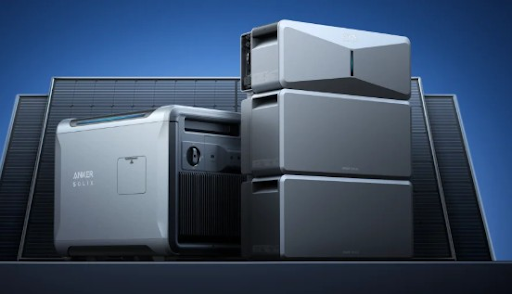
Battery capacity determines how much charging you can complete without sunlight; inverter output determines how quickly you can charge. Supplying 12 kWh of AC energy overnight could require about 17 kWh of nominal storage, assuming 90% inverter efficiency and 80% usable battery capacity. The Anker E10 Off-Grid Kit offers expandable battery storage, providing a relevant option to evaluate against these requirements. Confirm that its specific configuration can sustain your charger’s selected amperage while other necessary household loads are running.
How to Set Up an Off-Grid EV Charging System Safely
Check Electrical Compatibility and System Limits
Verify the inverter’s voltage, continuous wattage, output waveform, and grounding arrangement against the charger’s requirements. A 240-volt, 32-amp Level 2 charging session draws approximately 7.7 kW. The inverter must support that sustained draw, not merely advertise higher short-duration peak power. Check whether charging equipment operates correctly on an off-grid supply. Reduce charging current when necessary, and leave sufficient electrical headroom for refrigeration, lights, and other circuits operating at the same time.
Plan Backup Power and Manage Energy Loads
EV charging can drain batteries needed for everyday living. Set a minimum reserve for essential circuits, and schedule charging when solar production is strong or household demand is low. A home battery backup plan should establish which loads take priority during cloudy weather. Consider a compatible generator for periods of poor sunlight, following safe fuel and ventilation practices. Automatic load management can pause EV charging before the system reaches its power or energy limits.
Follow Installation Requirements and Electrical Codes
Have a qualified electrician assess the charger circuit, inverter connection, transfer equipment, grounding, and overcurrent protection. Follow applicable codes, plus local permits and inspections. Choose charging equipment rated for its environment, especially outdoors. Never connect an off-grid inverter to home wiring through an improvised outlet arrangement. Proper transfer or isolation equipment prevents unsafe backfeeding, while dedicated circuits and correctly sized conductors reduce fire risks.
Conclusion
Off-grid kits can power a home EV charger, including Level 2 equipment, provided the system delivers enough continuous AC output and stored or solar-generated energy. Begin with daily miles, calculate charging demand, and size panels and batteries for unfavorable weather as well as normal use. Preserve capacity for essential household loads, and choose a charging current the inverter can support continuously. With suitable electrical design and professional installation, off-grid EV charging becomes a practical option that works alongside your home’s solar energy system.
