



Specialized marketing helps construction brands stand out by replacing general claims about “quality and craftsmanship” with clear market positioning, proven technical skill, and messages aimed at serious buyers. Instead of joining a constant price-cutting battle, specialized marketing presents a contractor or specialty trade as a leading expert in a specific field. This can help the company win higher-margin projects, reduce long purchasing processes, and attract the right project partners.
In an industry where many companies can look alike, general advertising can spend money without building a stronger brand. Working with a dedicated construction marketing agency BuiltFor Studio helps builders explain what they do best. It turns detailed field skills into strong marketing assets that reach developers, architects, and institutional owners before they even open a bid package.
By moving away from broad campaigns, specialized marketing works as a filter. It helps construction firms submit fewer bids and win more work by directing estimating and sales efforts toward contracts where their method, equipment, or delivery model gives them a clear advantage.
What Competitive Challenges Do Construction Companies Face?
The construction industry is very crowded, with more than 3.7 million operating firms in the United States alone. National construction output is moving toward $1.75 trillion, with steady yearly growth expected. This large market attracts strong competition across every trade, project type, and location.
At the same time, economic pressure is reducing operating margins. More than 63% of contractors are very concerned about rising labor costs, while about 73% are dealing with ongoing changes in material prices. These pressures leave little room for poor pursuit decisions or bids that lose money. A clear brand position has become necessary for basic business stability.
Competition From Local, Regional, and National Contractors
Regional contractors in the middle of the market often feel pressure from both directions. Small local firms may have low overhead, strong neighborhood ties, and the ability to submit lower bids for smaller commercial and civil projects. Large national firms have major marketing budgets, strong balance sheets, and dedicated pursuit teams that can dominate formal buying processes.
This situation pushes growing construction companies to claim a clear area of strength. Without a strong identity that shows local relationships, knowledge of regional codes, and focused trade skills, mid-sized contractors can lose resources to national companies while also being underpriced by smaller local firms.
Difficulty Reaching Owners, Developers, Architects, and General Contractors
The buying process in construction is difficult to reach. Development managers and owner representatives often stand between contractors and owners. Architects focus on design quality and code requirements. General contractors protect their estimating and prequalification processes with strict screening rules.
Reaching these different groups requires messages that speak to each person’s professional concerns. A developer may focus on returns and construction loan payments. An architect may focus on structural execution and protecting the design. A general contractor may care most about site coordination and subcontractor financial strength. General brochures and standard websites often fail because they do not answer the specific questions each group has.
How Market Research Reveals Construction Brand Opportunities
Strong marketing plans do not come from guesses made in a boardroom. They come from careful market research. The global construction sector is expected to reach $19.59 trillion by 2032, and there are many areas of unmet demand for firms that study local permit records, capital spending patterns, and zoning changes.
Good market research helps contractors see where competitors are concentrated and where customer needs are still not being met. By reviewing market competition, rule changes, and areas of commercial growth, construction leaders can direct their marketing toward project types with higher margins and fewer competitors.
Define Target Audiences by Project Type, Location, and Buying Role
A strong construction marketing plan starts by dividing the market into clear buyer groups. Instead of marketing to “commercial clients,” a specialized firm can focus on asset types such as life sciences, advanced manufacturing, or historic building reuse. It can also focus on contract models such as Design-Build, Construction Manager at Risk (CMAR), or Integrated Project Delivery (IPD).
This division should also cover the duties of the people inside each organization. By learning the concerns of a VP of Capital Projects, a Director of Facilities, and a Lead Project Architect, a firm can create marketing materials that address the business, legal, and operating measures each person must meet.
Identify Underserved Construction Niches and Buyer Concerns
Market research often reveals repeated problems in the construction process that broad contractors do not address. Today, about 87% of project owners report greater concern about delivery dates, carbon emissions, and supply chain reliability. Contractors that build their brands around these problems can stand apart quickly.
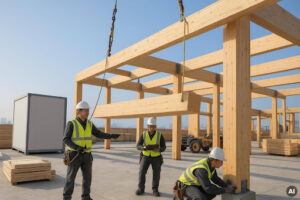
Underserved areas may include difficult municipal permitting, mass timber construction, prefabricated and modular MEP assemblies, or cleanroom renovations that must continue under strict operating rules. When a brand focuses on these specific needs, it moves away from standard price comparisons and becomes a rare and needed specialist.
Which Brand Differentiators Make Construction Companies More Memorable?
Many construction firms use the same visual and written ideas. Their websites often show stock images of hardhats, blueprints, and cranes, along with blue-and-gray color schemes. They make broad claims about “delivering excellence on time and on budget.” These statements describe the minimum clients expect, not a real difference.
Real differentiation starts with an honest review of what the company does well. The firm must identify what it performs differently, more consistently, or more creatively than other companies in its market. That capability should become a central part of the brand.
Project Experience and Measurable Outcomes
The strongest differences are supported by clear performance data. Instead of saying that a firm works quickly, its brand could explain that its modular mechanical assemblies regularly reduce normal construction schedules by four months. Instead of making a general safety claim, it could show an Experience Modification Rate (EMR) below the industry average across 750,000 continuous field hours.
Specific project experience also gives buyers proof. Examples may include completing seismic upgrades in occupied healthcare facilities or managing cold-weather concrete pours for heavy civil infrastructure. Clear results and numbers replace general claims with facts that buyers can present to their investment committees.
Translate Differentiators Into a Clear Value Proposition
A difference matters only when it supports an important client goal. Specialized marketing turns technical strengths into business benefits that financial decision-makers can understand.
For example, a contractor may use Building Information Modeling (BIM) down to the individual nut and bolt during preconstruction. The value is not simply “we use advanced 3D software.” A clearer value proposition is: “We find mechanical conflicts before construction, helping prevent costly change orders and keeping your project on schedule for occupancy.” Turning field skills into financial and schedule certainty is the basis of strong construction positioning.
How Specialized Branding Builds Trust Before the First Meeting
Trust in construction starts before the first discovery meeting or formal RFP. In fact, 96% of decision-makers use digital channels to research local companies, including specialty builders and engineering contractors. If a brand looks outdated, inconsistent, or similar to every other company during this quiet review, it may be rejected before the firm knows an opportunity was available.
A strong brand plan brings every visual and written contact point together to show stability and field knowledge. Each presentation of the company-from a billboard beside an interstate project to an executive qualifications package-should support the same view of the firm as reliable and professional.
Create Consistent Messaging Across Websites, Proposals, Vehicles, and Signage
Consistency suggests good control. When a developer sees the same visual standards and clear tone across a contractor’s site fencing, vehicles, safety equipment, website, and proposal documents, it supports the idea that the firm pays close attention to its work.
Mixed messages create doubt. If the company’s vehicles carry an old logo, the website looks neglected, and RFP responses use different fonts and copied language, buyers may question its quality control. Matching the physical and digital presentation shows that the company takes pride in its work everywhere.
Use Project Photography, Case Studies, Reviews, and Testimonials as Proof
Few things build trust faster than proof of completed work. Professional architectural photography can show finished buildings as well as clean, active, well-run job sites. This gives buyers a quick view of the company’s size and working standards. Images also help show that the firm has the equipment, staff, and safety practices needed for difficult projects.
Images should appear with real client feedback. Comments from respected developers, letters from school district superintendents, and verified reviews on professional directories support the company’s record. When potential clients see peers confirming a contractor’s work, they feel less risk in choosing that firm
Which Digital Marketing Channels Increase Construction Brand Visibility?
Construction buying no longer depends only on phone calls and informal industry connections. About 60% of average construction marketing budgets now go to digital channels. Builders that invest in focused online visibility can reach qualified buyers when a development moves from funding into design and purchasing.
A balanced digital plan avoids spending too much effort on social media numbers that do not lead to business. It focuses on places where commercial buyers actively research solutions for future capital projects.
Build an Optimized Website That Converts Qualified Visitors
A construction website should act as an online qualifications package. It should do more than display company information. The site needs simple menus, quick mobile loading for field staff, and clear paths that lead each type of visitor to the information they need.
Websites that generate strong leads often include detailed project portfolios that visitors can filter by sector, square footage, and delivery method. They also provide clear calls to action for prequalification requests, direct contact details for regional leaders, and downloadable capability statements made for architecture and engineering reviews.
Target High-Intent Searches With Construction SEO and Paid Search
Search engines handle more than 8.5 billion queries each day, making search visibility a valuable source of qualified leads. In fact, 85% of professional marketers say search engine optimization (SEO) works better over time than basic pay-per-click (PPC) advertising. Organic construction SEO leads cost about $85 each, compared with more than $210 for leads produced through cold outreach.
Strong search visibility depends on specific, high-intent searches rather than broad keywords. A heavy civil contractor may gain little from ranking for “construction company,” but it can gain much more by ranking for “design-build wastewater treatment contractor Texas” or “cleanroom construction firm Boston.” Combining technical on-page SEO with focused Google Ads gives the company immediate exposure for regional bids while building lasting organic search strength.
How Content Marketing Positions Construction Brands as Trusted Experts
Construction content marketing is not about producing shallow lifestyle articles. It is about offering useful technical guidance that teaches project owners, reduces financial risk, and explains regulatory requirements. By publishing expert content, construction brands can show their knowledge before an owner sends out a formal Request for Qualifications (RFQ).
Firms that share useful information about building science, supply chain planning, and project management can become recognized industry leaders. This content presents the builder as a strategic adviser throughout the life of a property, rather than only as a provider of labor and equipment.
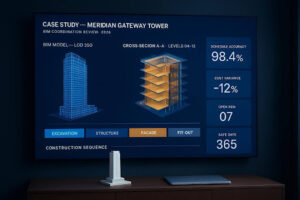
Publish Case Studies That Demonstrate Process, Results, and Problem-Solving
A strong construction case study does more than describe the finished building. It explains the engineering and logistics problems that appeared during the project and shows the methods used to protect the budget and completion date.
A useful case study should explain:
- The original design, soil, or regulatory problems that threatened the project.
- The preconstruction and value engineering methods used to control costs.
- The trade coordination, prefabrication processes, or scheduling methods used in the field.
- The final business result for the client, shown through cost savings, early completion, or certifications such as LEED or WELL.
Answer Buyer Questions About Cost, Timelines, Permits, Safety, and Materials
Development teams, asset managers, and public leaders regularly look for reliable information about changing construction conditions. By creating clear resources about local permits, new building codes, and material price changes, a construction firm can reach buyers at the start of the planning process.
Answering difficult questions-such as comparing the life-cycle cost of mass timber with post-tensioned concrete or explaining how to obtain deep foundation permits in coastal flood zones-shows technical skill. More decision-makers are using AI search tools to review industry information. Publishing clear and reliable answers increases the chance that these systems will refer to the firm when potential clients search for help.
How Relationship Marketing Expands Construction Opportunities
Construction has always depended on professional relationships. Specialized marketing does not replace those relationships. It helps a company support and grow them. By combining modern communication systems with traditional industry networking, contractors can manage relationships across their full market.
About 88% of decision-makers place strong trust in recommendations from people they know. Relationship marketing keeps a company’s wider network of partners engaged and can turn casual professional contacts into regular sources of qualified bid opportunities.
Build Referral Networks With Architects, Engineers, Suppliers, and Subcontractors
Many commercial opportunities begin inside architecture and engineering firms months before a general contractor hears about them. Co-marketing with companies that do not compete directly-such as architecture studios, MEP consultants, commercial real estate brokers, and specialty material suppliers-can create strong early sources of leads.
Firms can support these relationships by hosting technical lunch-and-learn sessions, writing whitepapers together about new design-build practices, and sharing opportunities across their networks. When architects and engineers see a builder as a partner that protects the design and prevents field conflicts, they are more likely to recommend that builder during early team selection.
Turn Satisfied Clients Into Reviews, Referrals, and Repeat Business
The least expensive project for a contractor to win is often the next project from an existing client. Many builders finish the punch list, collect final retainage, and then allow the relationship with the owner to fade. A planned relationship program keeps useful contact going throughout the life of the building.
Post-occupancy check-ins, quarterly market updates, and regular features about completed client projects keep the company familiar to past customers. Asking for online reviews, video testimonials, and introductions to other developers also helps each successful project create future business opportunities.
How to Build a Specialized Construction Marketing Plan
Building a good marketing plan requires the same organized, phased method used for a complex construction project: create the plan, gather the right tools, carry out the work, review the results, and make improvements over time. Replacing random marketing activities with a formal plan protects limited funds and connects marketing spending to company revenue goals.
Without clear measures and planned milestones, construction marketing can become a collection of disconnected tasks that fail to show future sales or business growth. A structured plan connects each marketing dollar to qualified opportunities.
Set Measurable Goals for Awareness, Qualified Leads, Proposals, and Revenue
Every strong marketing program should use SMART goals: Specific, Measurable, Attainable, Relevant, and Time-bound. Instead of using a vague goal such as “increase regional awareness,” a specialized contractor should set exact targets linked to business growth.
| Marketing Stage | Strategic Objective | Key Performance Metric |
| Brand Awareness | Build authority in focused regional markets | Targeted website traffic, organic impressions for niche industry keywords |
| Lead Qualification | Capture serious prequalification requests | Number of qualified RFP/RFQ downloads, discovery calls booked |
| Pursuit Performance | Improve bid-to-win rates among ideal clients | Proposal conversion rate, average contract value submitted |
| Revenue Impact | Increase booked construction revenue | Total pipeline value from pursuits started through marketing |
Track Cost per Lead, Conversion Rate, Pipeline Value, and Customer Acquisition Cost
To measure the return on investment (ROI) of marketing, construction leaders need to track results across long sales cycles with AEC customer relationship management (CRM) systems. Construction contracts often have high values, so judging marketing only by early website clicks can give a false picture.
Management should track measures that show real business progress: Customer Acquisition Cost (CAC), Cost Per Qualified Lead (CPQL), the rate at which initial contacts become proposal submissions, and the total value of the pipeline influenced by marketing. These figures show which campaigns produce profitable work and help leaders direct funds to the strongest channels.

Should Construction Companies Work With a Specialized Marketing Agency?
Choosing between an internal marketing team, a general creative agency, and an industry-focused partner is a major business decision. General agencies may create attractive graphics, but they often do not know the details of AIA contracts, public bid limits, trade sequencing, bonding capacity, or the working relationships involved in construction management.
When an agency lacks industry knowledge, contractor employees may spend many hours teaching the marketing team basic construction concepts. An agency focused on the built environment already knows common market conditions, industry language, and technical details. This speeds up campaign work and prevents expensive mistakes at the start.
When In-House Teams Need Construction-Specific Strategy and Execution
Marketing coordinators at mid-sized construction firms are often busy with urgent proposal deadlines. Studies show that nearly 63% of AEC marketing teams spend more than half of their work hours preparing proposals and answering RFPs. Often, one out of every three proposals is submitted for a project outside the firm’s ideal client profile.
This constant work leaves little time for long-term brand building, search engine optimization, content production, or account planning. A specialized partner provides strategy, industry knowledge, and production support for long-term marketing. This allows internal estimators and marketers to focus on active pursuits and closing business.
Questions To Ask Before Choosing a Construction Marketing Partner
Before signing an agency agreement, construction executives should use the same careful review process they apply when choosing a major specialty subcontractor. Past results, technical knowledge, and clear reporting all matter.
Useful questions include:
- “Can you share measurable case studies from the architecture, engineering, or construction sectors?” An experienced firm should be able to show verified results from similar contractors, rather than only examples from retail or software companies.
- “How do you handle buying processes that involve developers, architects, and public agencies?” This shows whether the agency understands the many people involved in construction purchasing.
- “How will you measure marketing’s contribution across an eighteen-month sales cycle?” The agency should explain CRM connections, pipeline attribution, and tracking across several interactions instead of relying on basic website views.
- “Who writes your technical content, and what experience do they have in construction?” This helps confirm that the people representing the brand know the difference between post-tensioned slabs, tilt-up panels, and pre-engineered metal buildings without needing a basic introduction.
Choosing an agency should be seen as more than a routine operating cost. It is an investment in the company’s market position. The right specialized marketing plan can help construction firms handle economic downturns, protect hard-earned margins, and build a respected brand across the construction industry.
