


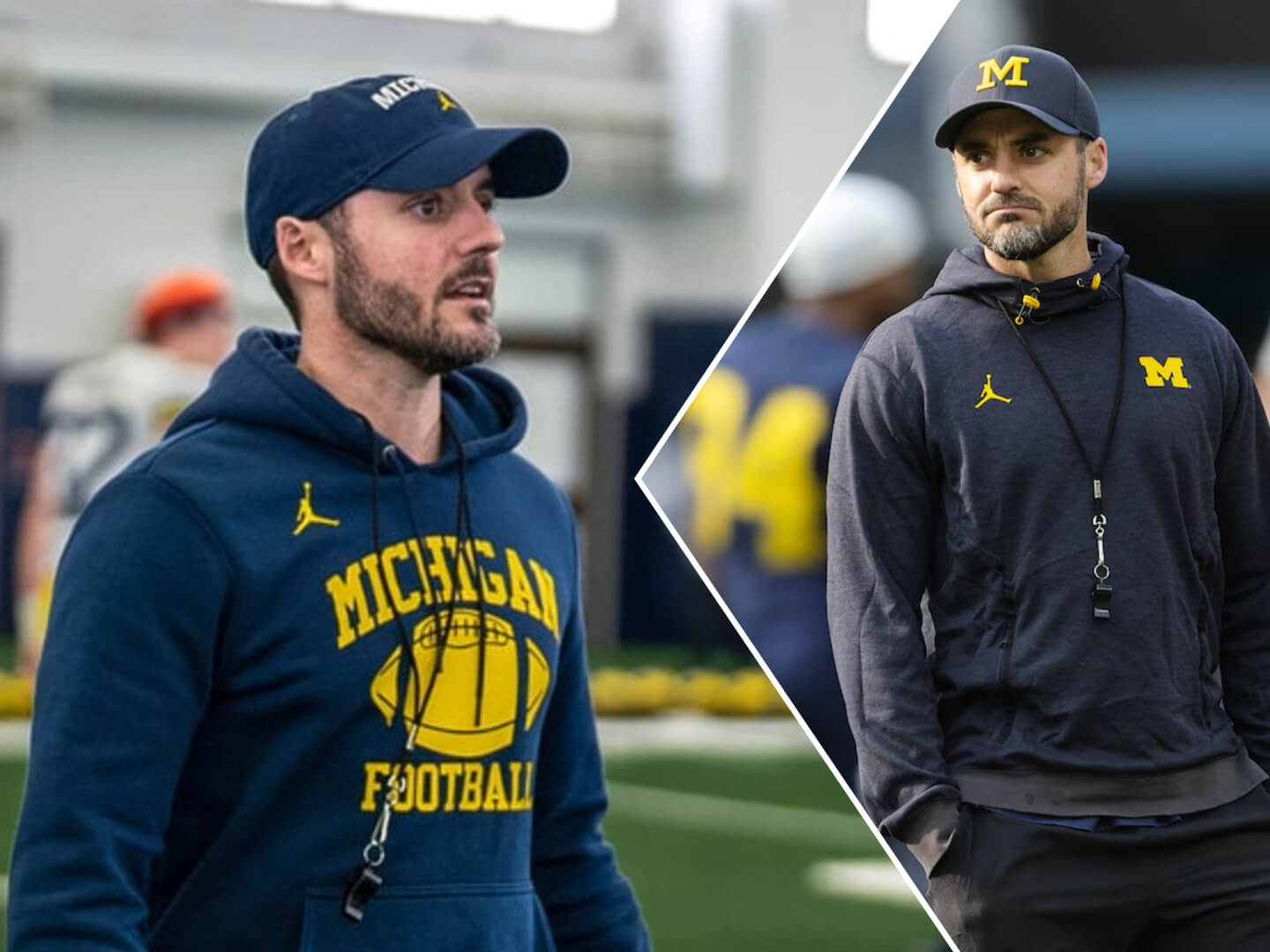
The Jesse Minter show cause case became part of the wider public discussion surrounding the University of Michigan football program and NCAA enforcement. Because several separate allegations were examined within the broader investigation, Minter’s individual violation has sometimes been described inaccurately or confused with more serious conduct involving other people.
The official record presents a narrower story. Minter agreed that he sent impermissible text messages to a high-school football prospect before NCAA recruiting rules allowed direct communication. He acknowledged responsibility, entered a negotiated resolution and received a one-year show-cause order.
That penalty was significant within college athletics, but it was not a criminal sanction, a lifetime coaching ban or an NFL suspension. Understanding the case requires separating the confirmed recruiting violation from the wider Michigan investigation and examining exactly what the NCAA’s order required.
Who Is Jesse Minter?
Jesse Minter is an American football coach whose career has included positions in both college football and the NFL. He began coaching as a defensive intern at Notre Dame in 2006 before working at Cincinnati, Indiana State and Georgia State.
Minter later joined the Baltimore Ravens’ defensive staff, serving in several roles between 2017 and 2020. He returned to college football as Vanderbilt’s defensive coordinator in 2021 and moved to Michigan the following year.
At Michigan, Minter served as defensive coordinator during the 2022 and 2023 seasons. His work brought considerable recognition, including finalist status for the 2022 Broyles Award, which honors an outstanding assistant coach in college football. Michigan eventually won the national championship for the 2023 season.
After leaving Michigan, Minter followed Jim Harbaugh to the Los Angeles Chargers. He served as the Chargers’ defensive coordinator before continuing his professional coaching career at the highest level of American football.
How the Case Began
The violation involving Minter emerged during a much larger NCAA investigation into Michigan football. According to the negotiated resolution, NCAA leadership received information in October 2023 concerning possible violations within the program.
While investigating those matters, enforcement staff discovered additional information about recruiting activity that had taken place during the spring of 2023. That evidence included early communication between Minter and a high-school football prospect.
The NCAA’s complete Michigan decision later explained that the broader matter contained two distinct categories of conduct. One involved an impermissible scouting operation associated primarily with former staff member Connor Stalions. The other involved separate recruiting violations committed by several individuals.
Minter’s case belonged to the second category. His negotiated resolution addressed early recruiting messages and did not identify him as the organizer of the scouting operation.
The Recruiting Messages
The official agreement states that Minter communicated with a football prospect from January 18 through April 25, 2023. During that period, he exchanged 18 text messages with the prospect.
The athlete was a member of the high-school graduating class of 2025. NCAA rules at the time did not permit the communication before June 15 following the prospect’s sophomore year.
The timing therefore made the messages impermissible, regardless of whether they involved promises, financial benefits or a completed commitment. Recruiting rules control not only what a coach may offer but also when direct communication may begin.
The case was not based on a single accidental reply. The messages were spread across several months, and the agreed facts stated that Minter knew the prospect’s graduation class while communicating with him.
The Compliance Reminder
An important detail in the NCAA record concerns a reminder Minter received while the communication was taking place. On February 11, 2023, Michigan’s director of football recruiting reminded him of the rules governing calls and text messages to the prospect.
Despite that reminder, Minter later sent three additional messages. Two concerned a situation involving another football prospect that Michigan’s coaching staff wanted to address.
This sequence mattered because it affected how the NCAA assessed his awareness and responsibility. The conduct could not be treated solely as a misunderstanding about the athlete’s school year once the recruiting restriction had been brought directly to his attention.
The NCAA’s public summary also stated that Minter was aware the early communications were impermissible and did not report them to Michigan’s compliance department.
The NCAA Finding
Minter and the NCAA enforcement staff agreed that the text messages violated recruiting communication legislation. The cited provisions came from the NCAA Division I rulebook governing contact with prospective student-athletes.
The violation was classified as Level II–Mitigated. A Level II case generally concerns conduct that is more than isolated or minor but does not reach the severity assigned to Level I violations.
The word “mitigated” does not mean that the violation was dismissed or considered harmless. Instead, it indicates that the applicable aggravating and mitigating circumstances placed the case within the mitigated penalty range for Level II conduct.
Minter accepted the agreed facts, the violation classification and the resulting penalties through the NCAA’s negotiated-resolution process. The Committee on Infractions approved that agreement.
Aggravating Factors
The agreement identified two aggravating factors. First, it found that a person in a position of authority had participated in or negligently disregarded the wrongful conduct.
That factor reflected Minter’s role as an assistant football coach with direct responsibility inside a major college program. Coaches in such positions are expected to understand and follow recruiting restrictions rather than rely entirely on compliance employees to stop improper contact.
The second aggravating factor concerned intentional, willful or blatant disregard for NCAA bylaws. The record noted that Minter knew the prospect’s graduating class and continued communicating after receiving a reminder about the restriction.
These findings explain why the NCAA did not handle the matter as a minor administrative error. The timing, number of messages and knowledge attributed to Minter gave the violation greater weight.
Mitigating Factors
The NCAA also recognized several circumstances in Minter’s favor. During his May 15, 2024, interview, he promptly acknowledged the communication and accepted responsibility for the violation.
He also took steps to help bring the case to a timely conclusion by participating in a negotiated resolution. Resolving the matter through an agreement reduced the need for his portion of the case to proceed through a contested hearing.
Another mitigating factor was the absence of previous findings that Minter had committed a Level I, Level II or major NCAA violation during his coaching career.
After weighing both sides, the parties agreed that Level II–Mitigated was the proper classification. His cooperation did not erase the conduct, but it affected the final penalty range.
What a Show-Cause Order Means
A show-cause order is an NCAA penalty directed at an individual rather than merely at a university. It follows the coach if that person moves to another NCAA member institution during the stated period.
The term can be confusing because it does not always impose identical restrictions in every case. Some orders require a limited suspension or recruiting restriction. Others prevent nearly all athletics-related participation.
Under this system, an NCAA school wishing to employ the penalized person must comply with the order. The institution may also contact the Committee on Infractions and attempt to demonstrate why some or all of the restrictions should not apply.
A show-cause order can therefore make employment in college athletics difficult, but its practical effect depends on the exact language of the decision. Minter’s order contained broad restrictions during its one-year duration.
Minter’s Penalty
The Jesse Minter show cause order ran from December 16, 2024, through December 15, 2025. During that period, any NCAA member institution employing him was required to restrict him from all athletically related activity.
An institution could seek relief by contacting the NCAA Committee on Infractions and showing why the terms should not apply. Without such relief, however, Minter could not perform an athletics-related role for an NCAA school during the covered period.
The negotiated resolution also imposed a public reprimand and censure. This was carried out through the public release of the agreement.
No additional violation was substantiated against Minter within his negotiated resolution. The document’s sections for other violations and other issues both stated that there were none.
Why the Dates Matter
The order’s starting date can create confusion because the NCAA publicly announced Minter’s agreement in April 2025. The negotiated resolution itself was dated December 16, 2024, and the penalty period began on that date.
Separating his portion of the case allowed Minter to begin serving the sanction while the NCAA continued processing the contested allegations involving Michigan and other individuals.
By the time the full Michigan infractions decision was released in August 2025, a substantial part of Minter’s one-year period had already passed. His order then expired on December 15, 2025.
This distinction is important for any present-day article. As of July 2026, the one-year show-cause period is no longer active.
Why the NFL Was Different
The NCAA governs college athletics through its member institutions. It does not possess authority to suspend a coach from employment with an NFL franchise.
Minter was working for the Los Angeles Chargers when the resolution became public. Because the Chargers are an NFL organization rather than an NCAA member school, the show-cause order did not prevent him from carrying out his professional duties.
This is why he remained active in the NFL throughout the penalty period. His continued professional employment did not cancel the NCAA sanction or represent an exception granted by the Committee on Infractions. The order simply applied to a different jurisdiction.
Had he attempted to accept an athletics-related job at an NCAA institution before December 16, 2025, that institution would have been required to enforce the restrictions or seek relief from the committee.
The Michigan Context
Minter’s violation cannot be discussed without recognizing that it was discovered during the NCAA’s investigation of Michigan. However, placing it in that context does not mean treating every allegation in the broader case as his conduct.
The full decision described an impermissible scouting scheme orchestrated and directed by Connor Stalions. It separately discussed recruiting violations involving other coaches and staff members, including inducements and early communication with prospects.
The NCAA processed Minter’s recruiting matter through its own negotiated resolution. That resolution concerned his 18 early text messages and his awareness of the recruiting restriction.
The official documents do not state that Minter designed or directed the scouting operation. Presenting his show-cause order as punishment for organizing sign stealing would therefore misrepresent the finding made against him.
What the Case Did Not Mean
The show-cause order was not a criminal conviction. NCAA infractions proceedings are part of a private athletic association’s regulatory system, not a prosecution conducted by a court.
It was also not a permanent ban from coaching. The restriction lasted one year and applied to athletics-related employment at NCAA member institutions during that defined period.
Nor was it an NFL suspension. Minter continued coaching professionally while the NCAA order was active.
Finally, the penalty did not establish that he was responsible for every violation associated with Michigan’s broader case. His agreed findings were limited to impermissible recruiting communication. Keeping those distinctions clear is essential to a fair account.
Effect on His Career
Although a show-cause order can seriously limit a college coach’s immediate employment opportunities, Minter was already established in the NFL when his agreement became public.
His professional reputation as a defensive coach continued to grow. His work with the Los Angeles Chargers received attention for organization, discipline and defensive improvement.
The NCAA penalty therefore had a limited practical effect on his professional employment. It remained an important part of his record, but it did not prevent NFL teams from evaluating his broader coaching ability.
His continued rise also demonstrated the difference between NCAA jurisdiction and professional football. The college penalty applied only to NCAA member institutions and did not control hiring decisions made by NFL organizations.
Public Confusion
The phrase “show cause” naturally sounds severe. Without reading the decision, a person might assume that Minter was prohibited from coaching anywhere or was punished for the central allegations in the Michigan scouting case.
Online discussion can make that confusion worse by combining separate penalties, individuals and allegations into a single narrative. In reality, NCAA decisions often contain different findings for a university, a head coach, assistant coaches and noncoaching staff.
Minter’s case is a strong example of why the specific negotiated resolution matters more than a general headline. The document identifies the dates, number of messages, applicable recruiting rule, aggravating circumstances, mitigating circumstances and exact employment restriction.
Those details do not make the conduct insignificant. They simply allow it to be described accurately.
Why the Violation Matters
Recruiting communication rules are designed to control when college programs may directly approach young athletes. The restrictions seek to create a more manageable recruiting environment and prevent programs from gaining an advantage by contacting prospects earlier than permitted.
Senior coaches are expected to know those boundaries. When a coach continues communication despite knowing an athlete’s graduation class and receiving a compliance reminder, the NCAA may view the matter as more serious than an isolated mistake.
At the same time, the enforcement process considers cooperation and prior history. Minter’s acknowledgment, acceptance of responsibility and participation in a negotiated resolution were among the factors that moved his case into the mitigated range.
The outcome therefore reflects both accountability and proportionality. He received a public sanction and a meaningful restriction within college athletics, but the order was limited to one year.
Current Status
The Jesse Minter show cause period ended on December 15, 2025. No part of the official one-year order remains active in July 2026.
The expired order does not remove the violation from the public record. It does mean, however, that the specific employment restriction described in the negotiated resolution has been completed.
Any discussion suggesting that he is presently serving an active NCAA ban would be outdated.
Minter remains known primarily for his defensive coaching work, while the NCAA matter continues to form one documented chapter of his career.
Final Thoughts
The Jesse Minter case involved a confirmed recruiting violation, not merely an unsupported rumor. He exchanged 18 text messages with a high-school prospect before the permissible contact date, knew the prospect’s graduation class and sent additional messages after receiving a reminder about the rule.
Minter acknowledged the conduct and accepted a Level II–Mitigated finding, a public reprimand and a one-year show-cause order. The restriction applied from December 16, 2024, through December 15, 2025, and would have prevented him from participating in athletics-related activity at an NCAA member institution unless that school obtained relief.
The case should nevertheless be kept within its documented limits. It did not amount to a criminal charge, did not suspend him from the NFL and did not identify him as the organizer of Michigan’s impermissible scouting operation.
His continued professional coaching career shows that the penalty’s practical effect was largely confined to college athletics. The most balanced account is therefore neither to dismiss the violation nor exaggerate it, but to present the official facts, the sanction he served and the wider context in which the case occurred.
